
Reimagining Creativity: AI, Art and Human Futures
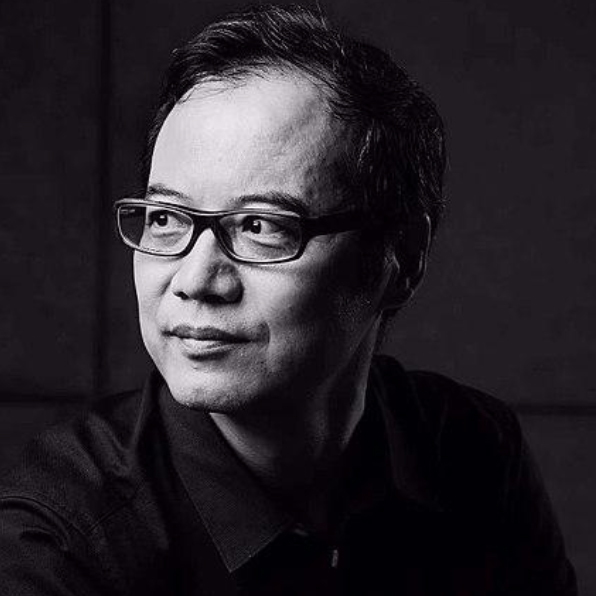
Wang Chunchen
| Director, Research Center of Contemporary Art, CAFA Art Museum, Central Academy of Fine Arts (CAFA) | China
This lecture examines how artificial intelligence is reshaping the conditions of artistic creation and prompting us to reconsider fundamental concepts such as creativity, authorship, agency, and responsibility. Rather than understanding AI simply as a new technical tool, the lecture approaches it as part of an expanded creative environment in which artists, data, algorithms, machines, platforms, and audiences interact. In this context, the artwork is no longer necessarily the result of an artist’s individual intention, but may emerge through relations among multiple human and non-human agents.
Drawing on examples from contemporary art—including works by Feng Mengbo, Cao Fei, Sun Yuan and Peng Yu, Miao Ying, Lu Yang, Refik Anadol, and Sougwen Chung—the lecture explores how machines increasingly participate in artistic processes by generating, responding, moving, interpreting, and producing unexpected outcomes. These practices complicate the conventional distinction between artist and tool and raise a central question: when machines participate in creation, who should be understood as the author?
The lecture argues that AI’s significance lies not simply in its capacity to generate images, texts, or other forms, but in how it shifts creativity from making toward orchestrating. As generative systems dramatically expand the range of available possibilities, human creativity increasingly involves selecting, contextualizing, interpreting, and judging what should become meaningful within culture and society. This transformation also invites a reconsideration of curatorial practice, as AI becomes capable of searching, classifying, connecting, generating, and recommending cultural content.
Ultimately, the lecture proposes that generation itself is not equivalent to creativity. Machines may expand possibilities, but humans remain responsible for determining value, meaning, and consequences. In the age of AI, what must be reimagined is therefore not only machine creativity, but human creativity itself—as a practice of judgment, selection, and responsibility.
Wang Chunchen is an art critic, curator, and scholar with a Ph.D. in Art History. He works at the CAFA Art Museum of the Central Academy of Fine Arts (CAFA) in Beijing and was awarded the Chinese Contemporary Art Critics Award in 2009.
His research focuses on contemporary art theory and criticism, with particular interests in contemporary visual culture, transformations in painting, cultural critical theory, contemporary art, and image criticism. His academic and curatorial practice explores the changing conditions of contemporary art and its relationship to broader cultural and social contexts.
Wang has published extensively on art history, theory, and criticism. His publications include Art Since 1940, Phenomenology of Painting, After the End of Art, The Abuse of Beauty, and The Language of Art History, among others.
He has curated numerous exhibitions in China and internationally, including projects in Beijing, Hong Kong, New York, London, and South Korea. Through his research, writing, teaching, and curatorial practice, Wang has contributed to critical discussions surrounding Chinese contemporary art and its relationship to international contemporary art discourse.







27th Advanced Imaging International Festival
© 2026 AIIF, Chung-Ang University. Homepage draft.